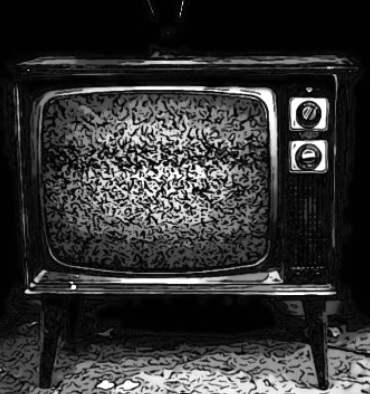
Americas Past Time: TV, Internet, and TV on the Internet
We spend a great deal of time watching
television and even though that is slowly decreasing it’s only because we can
now stream shows on the internet; But what message are we really getting from
our favorite shows or all those "wonderful" commercials that come
along with it?! What hidden messages are lurking within?
Before in a typical Minstrel Show, white men would act and calm to be
authentically Negro. They portrayed their comedic sketches as if it were everyday
real life for an average African American. This gave the mostly white audience
a huge misconception about how people of color really are, not to mention when
black Americans began to do the same in order to make a living. That type of negativity
is what gives power to popular culture. It has the ability to distort, shape,
and change our view of reality. (Gallagher, 2012)
Unfortunately
“both historically and today, ideas about race have dictated notions about
white superiority as much as they have about black inferiority.” (Gallagher
2012:286) That’s to say that blacks are STILL being depicted as poor, bad, uneducated
people, where as whites are seen as rich, good, highly educated people in the
media. We like to think that we have moved beyond the color of our skin because
now both blacks and whites coexist on the same “stage”. But in reality people of
color are still being stereotyped and people (mostly white) find nothing wrong
with that. This is what creates color-blind racism as Bonilla-Silva has put it;
the false thinking that there is no more racism because there are laws against
it and because there is no more slavery.
“The media produce and circulate images that
determine our beliefs and attitudes and that inform our behaviors.” (Gallagher,
2012:297) Something like TV has a huge influence
on our daily lives like the way we eat, drink, sleep, and treat others. It was
bad before but now with a million more ways for us to express our self comes
with a million more ways for other people to tell us how we should do that.
In many of
our favorite shows, if lucky enough to have a diverse cast, African American
women are still perceived as Jezebels, an insatiable sexual being unable to
control her sexuality (Gallager 2012). As in “Hart of Dixie” where the cousin
of the only black main character, ex-football star now small town mayor (his super
blow popularity is the only reason why he was elected), comes to town and is
known to be crazy and someone that rushes into relationship why too fast. TV
shows are what many people use to unwind from a long day and don’t really pay
attention to what they are watching but when you take a step back and put the
TV on “mute” as Alice Park mentions on “TV May Perpetuate Race Bias” you
realize that there is more to that “meaningless” programming.
So we
must be more aware of what we are passively watching and engaging in by using
the guild lines described in Fair:
what are the sources (who is profiting form it), does it lack Diversity, is there
loaded language, what are the unchallenged assumptions, are there double standards,
do stereotypes skew coverage ex… They are trying to tell you something
and it’s not always nice or true. People of color are still being measured and devalued
and we must change that.
We need to truly stop living in the
past. When award winning shows like Mad Men which “truly depict racism in the
past” and we have to wait for the 5th season in order (MAYBE) for
race to be the center of the show, well I think we are watching the wrong type
of shows. Why do we like to see people of color being put down and struggle to
make a living and call it a thing of the past? Yes we have come a long way but that
struggle still continues today. Let’s start being more observant of what we passively
watch on the TV or on the Internet!
Work Cited
Bonilla-Silva, Eduardo, ed. 2010. Racism Without Racists: Color-Blind Racism
and Racial
Inequality in Contemporary America. 3rd ed. Rowman and Littlefield Publishers, Inc.
Inequality in Contemporary America. 3rd ed. Rowman and Littlefield Publishers, Inc.
Gallagher,
Charles A., ed. 2012. Rethinking the Color Line: Readings in Race and
Ethnicity. 5th
ed. La Salle University.

No comments:
Post a Comment